Livonia's median sale price sits somewhere between $325,000 and $340,000 right now, depending on which window you measure. That number will tell you almost nothing useful if the house you're chasing is a ranch.
Look past the median and a narrower fight comes into focus. Supply across the city fell to well under a month by summer 2026, with more homes already under contract than were sitting active on the market at the same time. Closings in June averaged just six days on the market, and well over half of that month's sales were gone inside a week. That pace isn't happening evenly across every price point and floor plan. It's concentrated hardest on Livonia's single-story homes, and the reason has less to do with buyer taste this year than with a Michigan tax law from 1994 that nobody brings up at the open house.
What the Citywide Number Actually Hides
Three different measurement windows put Livonia's median sale price in three slightly different places this year, and the gap between them says more than any single figure does.
| Window measured | Median sale price | What it captures |
|---|---|---|
| Trailing 3 months through June 2026 | $335,000 | Broad average across all closed sales, up 4.9% year over year |
| Trailing 6 months through August 2026 | $325,000 | Middle half of sales fell between $260,000 and $407,500 |
| June 2026 alone | $340,000 | The fastest single month, with a typical listing closing in six days |
The spread between $260,000 and $407,500 for the middle half of the market is unusually narrow for a city this size, which is exactly why a citywide median is a starting point and not an answer. A three-bedroom home and a four-plus-bedroom home aren't competing for the same buyers or moving at the same speed, and neither are a ranch and a colonial priced within a few thousand dollars of each other.
The Squeeze Is Sharper on One House Type
Break the closed sales down by bedroom count and the picture sharpens. Three-bedroom houses accounted for 735 of the roughly 1,200 homes sold over the past year, closing at a median around $315,000. Four-plus-bedroom homes ran closer to $410,000. That gap looks like a straightforward size premium until you notice which structure type dominates the smaller, cheaper end: Livonia's postwar ranch stock.
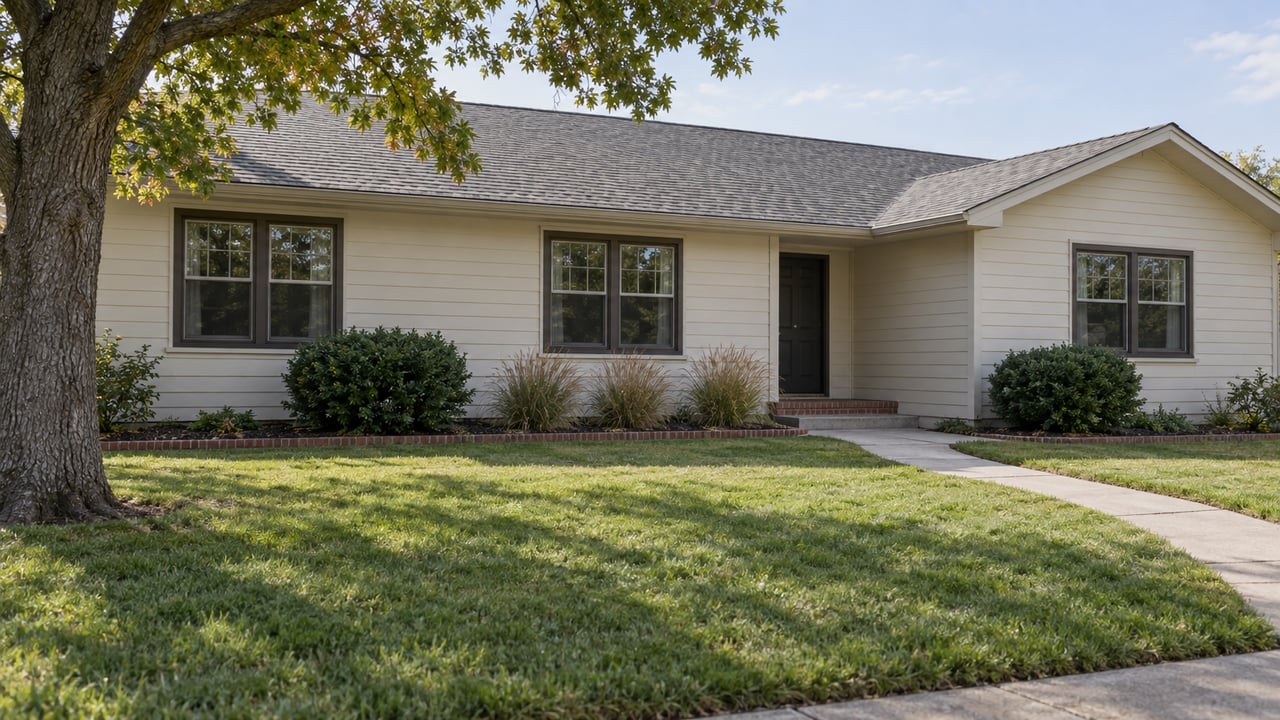
New construction barely factors in. Only about 15 of the past year's 1,200 sales were homes built in 2024 or later, and just one new construction listing was active citywide at last count. Livonia was built out decades ago, mostly in the postwar boom that filled Metro Detroit with single-story ranches on quarter-acre lots. That stock isn't being replenished. Every ranch that changes hands is one from a fixed, aging pool, not one competing against a fresh supply of new single-story builds the way it might in a growing exurb.
National survey data backs up why that specific house shape draws a crowd. Research from the National Association of Home Builders has found that roughly 80% of baby boomers and 53% of Gen Xers say they'd prefer single-story living, largely for aging-in-place reasons, and single-story homes have carried something like a 10% price premium over comparable two-story homes in markets where the surveys were run. Livonia's ranch inventory sits at the intersection of two trends that rarely overlap this cleanly: it's the exact product boomers are seeking out for accessibility, and it's also the smaller, more affordable square footage that a rate-squeezed first-time buyer can actually qualify for.
The Michigan Law Nobody Mentions at the Open House
Here's the mechanism that ties the shortage to something more durable than a hot season. Michigan's Proposal A, passed in 1994, caps how much a home's taxable value can rise each year while the same owner stays in place, but resets that value to current market levels the moment the home sells. A longtime Livonia homeowner sitting in a ranch they bought decades ago may be paying property taxes based on an assessment that's a fraction of what the home is actually worth today. Sell that home and buy something smaller down the street, and the new tax bill gets recalculated at full current value, often landing higher than what they were paying on the larger house they just left.
That math discourages exactly the households who own most of Livonia's single-story inventory from listing it, even in a market where demand for that inventory is unusually strong. The result isn't a shortage caused by construction lagging population growth. It's a shortage caused by a tax structure that makes staying put the rational choice for the people holding the keys to the houses everyone else wants.
Why Both Buyer Types Land in the Same Price Band
Michigan's Proposal A explains the supply side. National rate pressure explains why demand keeps arriving at Livonia's door specifically.
The 30-year fixed mortgage rate sat at 6.43% in the first days of July 2026, per Freddie Mac's weekly survey, holding roughly steady after the Federal Reserve left rates unchanged in June. At that rate, national data on home purchases has put the first-time buyer share of the market at a record low, hovering near one in five transactions, because in most metro areas the math simply doesn't pencil for two working incomes anymore.
Livonia's price point is the exception rather than the rule. A $300,000 to $400,000 home, which made up 36% of all Livonia sales over the past year, is one of the few remaining places where a dual-income household priced out of neighboring suburbs can still make a mortgage payment work. That band overlaps almost exactly with where the city's ranch inventory sits. So the same handful of single-story listings that appeal to an empty-nester looking to age in place also happen to be the homes a young family locked out of Northville or Plymouth can actually afford. Two buyer pools that would normally shop different price tiers are landing in the same bidding pool, competing for a supply that Proposal A keeps from growing.
What Livonia's Pockets Actually Look Like
Not every part of the city trades at the same speed or price, and the differences matter more here than in a market with more architectural variety.
- Rosedale Gardens carries historic charm on mature, tree-lined streets, with a housing stock that leans older and more varied in style than the city's typical postwar ranch subdivisions.
- Whispering Willows functions as a classic family pocket, generally trading closer to the citywide median with steady, less dramatic turnover.
- The 48152 area near the Northville border is where Livonia's higher end concentrates, with larger homes and four-plus-bedroom sales pulling the neighborhood's median well above the citywide figure.
A buyer comparing these pockets against Plymouth or Northville needs to know which one they're actually shopping, because a Rosedale Gardens colonial and a Whispering Willows ranch aren't playing by the same rules even though they might list at similar prices.
What This Means If You're Buying or Selling Right Now
If you own a Livonia ranch and you're weighing whether to sell, the current environment favors you more than the citywide median suggests. Demand for your specific house type is outpacing demand for the city as a whole, and the six-day median for June closings is a better predictor of your pace than the 11-day average across the broader three-month window.
If you're a buyer targeting a ranch in this price band, treat the citywide numbers as a floor, not a guide. A listing that looks reasonably priced against the $325,000 to $340,000 median could still draw the kind of competition that only shows up in the bedroom-count breakdown, not the headline figure. Full underwriting before you write an offer isn't optional in this segment. Neither is moving fast once a listing you want appears.
If you're comparing Livonia against a neighboring suburb with a more even mix of architecture and more recent construction, the ranch-specific squeeze described here is a Livonia-specific condition, not something you should assume applies evenly across every Southeast Michigan suburb you're considering.
FAQ
Is Livonia's overall housing market slowing down or speeding up? Recent months show acceleration, not cooling. The three-month trailing average through June 2026 put days on market at 11, while June's closings alone averaged six days, with well over half selling in under a week. That's a market getting faster, not slower.
If ranch demand is this strong, why don't more owners just sell and cash in? Because Michigan's Proposal A ties a homeowner's tax bill to how long they've stayed, not to what the home is currently worth. Selling and buying something smaller often means trading a low, capped tax assessment for a fresh one based on today's market value, which can raise the new tax bill even when the new home costs less.
Comparing Livonia against a nearby suburb, wondering what a specific ranch subdivision is actually worth this fall, or trying to figure out whether your own single-story home would move as fast as the data suggests? Jay Gingell works this exact stretch of Southeast Michigan every week and can walk through what your specific pocket of Livonia looks like right now.
This article is general information, not legal, tax or financial advice. Consult a qualified professional about your situation.