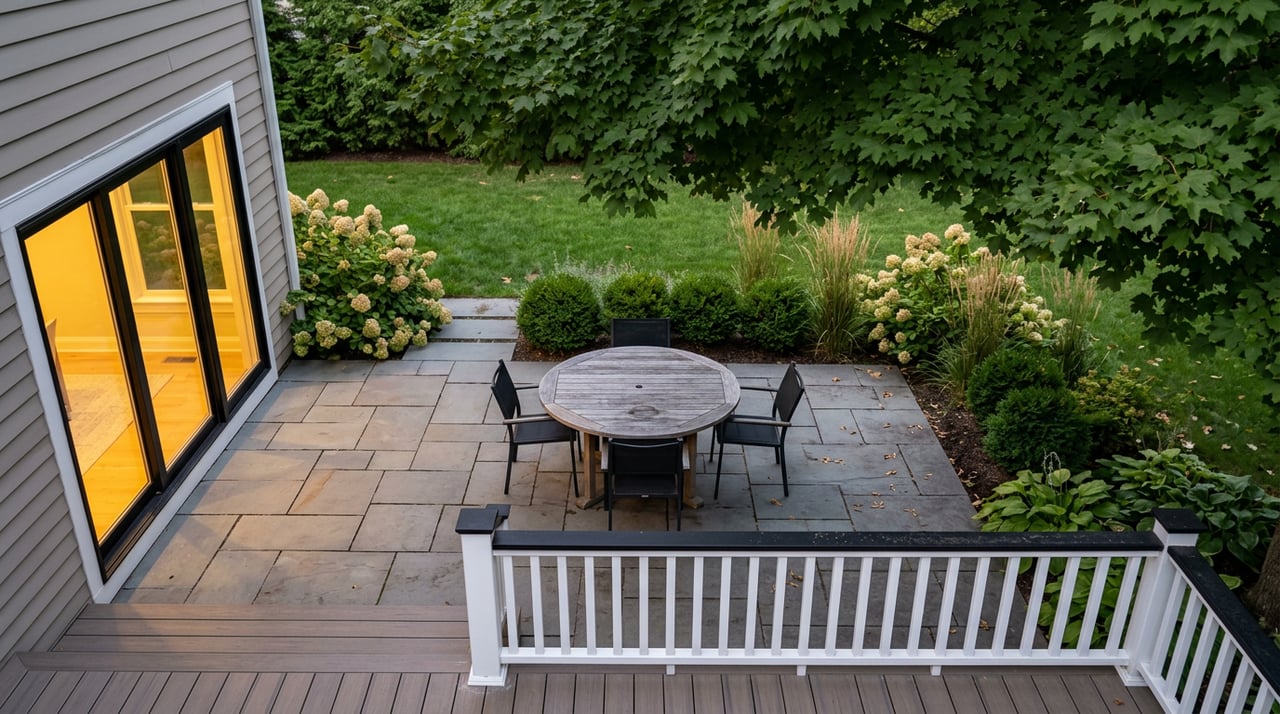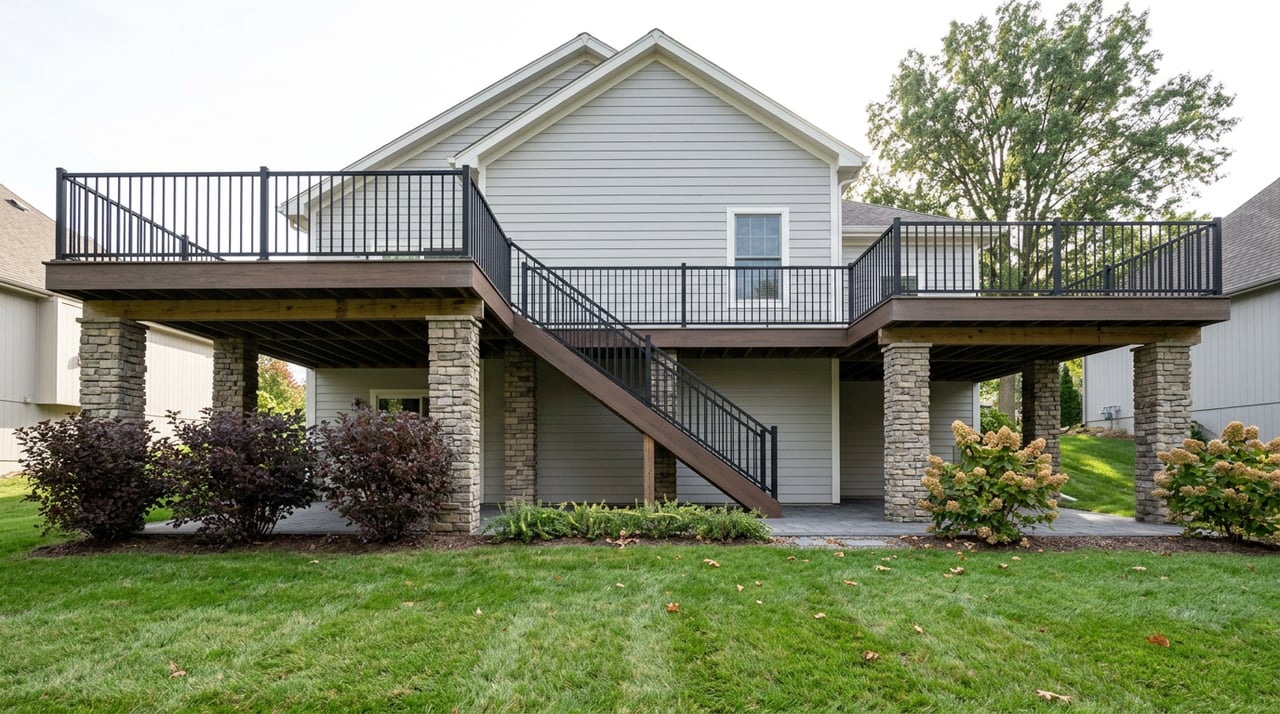
A homeowner in Pheasant Run pulls a permit from Canton Township, builds the deck, and moves on with life. Eighteen months later, when the home goes under contract, the buyer's title search or a neighbor's complaint surfaces something the permit never covered: the deck was never approved by the homeowners association. The township signed off. The HOA never did. And under Michigan law, that gap can force a removal, a redesign, or a lawsuit years after the last nail went in.
This is the piece of Canton's real estate market that rarely comes up until it already matters. If you're buying or selling a home inside one of Canton Township's HOA-governed subdivisions, the township's own permit and the association's approval are two entirely separate processes, and only one of them is required to close the sale cleanly.
The gap is written into the township's own rules
Canton Township is explicit about this on its own permits page: the township does not require HOA approval before issuing a residential permit, and it puts the burden squarely on the property owner to secure HOA sign-off separately. The township also states plainly that it will not issue refunds for permits that are reviewed, issued, and then canceled because of an HOA requirement.
Read that again from a transaction standpoint. A seller can hold a valid, paid-for township permit for a deck, fence, shed, or siding change and still be sitting on an unresolved HOA violation. A buyer can tour a home with a deck that looks finished and permitted and have no way of knowing, without asking the HOA directly, whether the association ever approved it.
Where this actually shows up
Canton Township is built out with planned subdivisions where architectural review is part of daily life, not an exception. Pheasant Run, developed around the Pheasant Run Golf Course, includes the Fairway Pines community of 309 single-family homes governed by a volunteer HOA board that maintains bylaws, covenants, and restrictions homeowners agree to at closing. Carriage Hills, governed by the Meadows of Canton HOA, covers 106 homes with its own annual assessment and maintenance obligations. Cherry Hill Village, Sunflower Village, and The Hamlet round out the township's other planned-community footprint, each with HOA standards that govern exterior changes.
A local deck-building contractor who works across these subdivisions puts the HOA review window at two to four weeks, depending on how often the board meets, and notes that walkout configurations common in newer Canton subdivisions require engineered plans before a board will even consider the submission. That's a real timeline a buyer or seller needs to plan around, separate from whatever the township's own permit turnaround looks like.
None of this makes Canton's HOAs adversarial. It means the review has two owners, not one, and only one of them is checking your paperwork at the counter.
What Michigan courts have already decided
This isn't a hypothetical risk. Michigan appellate courts have ruled on exactly this scenario more than once, and the pattern is consistent enough to matter for anyone evaluating a home with existing modifications.
| Case | What happened | What the court decided |
|---|---|---|
| Village of Hickory Pointe Homeowners Ass'n v Smyk (2004) | Owners built a deck without HOA approval; a trial court called it a minor, technical violation | The Court of Appeals reversed, ruling that HOA restrictions are a contract and must be enforced as written, even for small violations |
| Dearborn Hills Civic Ass'n v Bittar (Nov. 2025) | Homeowners installed cedar siding without approval, then removed it after the HOA sued | The court held that fixing the violation mid-lawsuit doesn't erase it, and the association could still recover damages |
| Stuart v Chawney (Michigan Supreme Court) | An HOA tried to enforce architectural approval, but had never actually formed the required review committee | The court sided with the homeowner, holding that a restriction requiring a specific approval body is unenforceable if that body never existed |
The first two cases are the ones that should give a Canton seller pause. A permit in hand and a deck that's been standing for years do not settle the matter if the HOA never approved it, and undoing the work after the fact does not automatically make the violation go away. The third case is the one worth knowing as a counterpoint. If an association's own governing documents require a specific architectural control committee and that committee was never properly formed, the restriction may not hold up. It's a detail worth asking about, not assuming.
What this means at the closing table
For a seller, the practical move is to pull the HOA's approval letter for any exterior work, not just the township's permit record, before listing. If that letter doesn't exist, it's better to know now than to have a buyer's attorney raise it during due diligence.
For a buyer, a few questions to the HOA before writing an offer can save months of uncertainty:
- Does the HOA have a record of approving the deck, addition, fence, or siding change currently on the property?
- Is there an open violation notice or unresolved architectural complaint tied to the home?
- What is the board's typical turnaround for reviewing a submission, in case you want to make changes after closing?
These are ten-minute questions for the association's management contact, and they answer something the township's own permit record cannot.
A quick word on the flip side
Not every unapproved improvement is a ticking clock. If a Canton HOA's declaration requires a specific architectural control committee and that committee was never formally created, or has lapsed without anyone reconstituting it, the association may not have a working mechanism to enforce the rule at all. That's not a reason to skip the HOA questions above. It's a reason to ask them precisely, because the answer might be more favorable than the worst-case scenario suggests.
FAQ
Does Canton Township check with my HOA before issuing a building permit? No. The township has stated directly that HOA approval is not part of its permit review, and that obtaining it is the property owner's responsibility.
If I already have a township permit, am I protected from an HOA dispute? Not automatically. A township permit and HOA approval are separate processes, and Michigan courts have upheld HOA enforcement even against homeowners who held valid permits.
Can I get my permit fee back if the HOA blocks my project after the township approves it? The township has said no. It will not refund permits that are issued and then canceled because of an HOA requirement.
How long does HOA review typically take in Canton's planned subdivisions? Local contractors report a two-to-four-week window for standard submissions, though it depends on the association's board meeting schedule and the complexity of the project.
If you're weighing a home in one of Canton's HOA subdivisions, whether you're selling a property with existing improvements or buying one and want to know what you're actually inheriting, Jay Gingell can help you sort through the HOA questions before they become closing-week surprises. Let's connect and request a free home valuation to start the conversation.