If you own a home in Livonia or you are thinking about buying one as an investment, you have probably asked a simple but important question: will the numbers actually work? That is a smart question, especially in a market where home prices sit in the low $300,000s and rents may not leave a huge cushion each month. The good news is that Livonia can make sense as a rental in the right situation, but the answer depends on your equity, your financing, and the condition of the property. Let’s dive in.
Livonia rental math at a glance
A quick first check is the relationship between local rents and local home prices. Zillow’s current rent estimate for Livonia is about $1,850 per month across all property types, while a 3-bedroom rental is estimated around $2,000 per month. On the sales side, Zillow puts the average home value at $314,705 and the median sale price at $302,500, while Redfin reports a $328,000 median sale price for March 2026.
That puts Livonia’s gross rent-to-price ratio at about 6.8% to 7.6%, depending on the home price and rent you use. That can be a helpful screening tool, but it is only the starting point. It does not account for mortgage payments, taxes, maintenance, vacancies, or local rental compliance costs.
Why gross rent is only step one
At first glance, a rent of $1,850 to $2,000 may seem workable against a home in the low $300,000s. But monthly cash flow gets tighter once you add real expenses. In Livonia, that is where many owners realize a rental may look fine on paper but feel much different in real life.
Freddie Mac reported the average 30-year fixed rate at 6.36% as of May 14, 2026. With 20% down, principal and interest on a purchase between $302,500 and $328,000 works out to about $1,507 to $1,634 per month. Against average rent, that leaves only about $216 to $343 before other costs, and even at a 3-bedroom rent of $2,000, the gross spread is only about $366 to $432.
When a Livonia rental makes more sense
In most cases, a Livonia rental makes more financial sense when you already have meaningful equity in the property. A lower loan balance can create breathing room each month and make the property easier to hold long term. That matters in a market where current rent levels may not support a large new mortgage very comfortably.
It can also make sense when the home is already in solid shape. If the property does not need major updates right away, you are less likely to get hit with expensive repairs during the first years of ownership. That can be the difference between a stable long-term hold and a property that drains cash.
A long-term mindset also helps. The research suggests Livonia is generally more attractive for owners focused on steady holding strategy rather than immediate monthly cash flow. If you expect the property to carry itself easily from day one, you may need to be very selective about price, financing, and condition.
Why property condition matters in Livonia
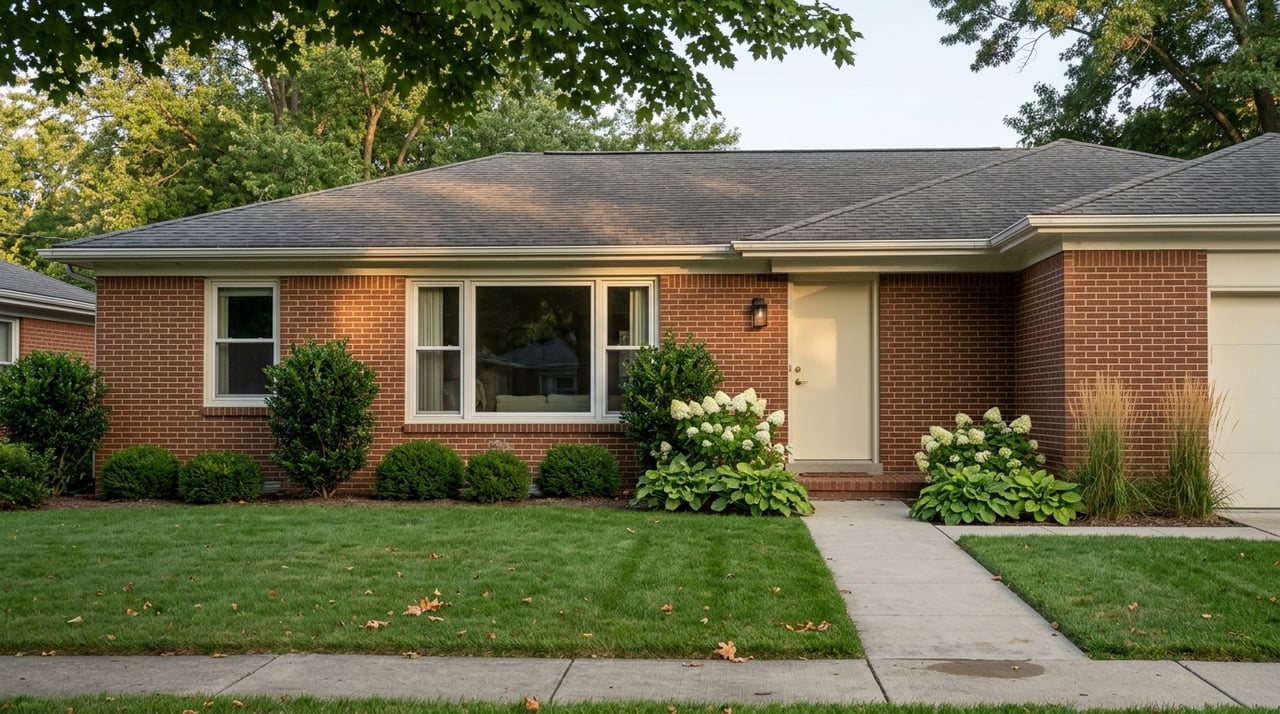
Livonia has a large stock of older homes, and that directly affects rental economics. The city’s planning documents note that most of the housing stock was built between 1950 and 1970, and more than 85% of the housing is single-family. Older homes can offer charm and established neighborhoods, but they also tend to bring more maintenance risk.
The city specifically points to common issues like roofs, gutters, heating systems, smoke alarms, GFCI outlets, and furnace certification. Those are not minor details for a landlord. If you are evaluating whether a rental property will make financial sense, you need to look beyond purchase price and rent and think carefully about near-term capital expenses.
Here are a few big-ticket items that can affect your numbers:
- Roof and gutter work
- Furnace or heating system repairs
- Window replacement
- Plumbing updates
- Electrical corrections
- Safety items needed for inspection compliance
If the property was built before 1978, lead-based paint rules may also apply. Landlords must disclose known lead-based paint or hazard information, provide the required EPA pamphlet, and include the required lease language.
Local demand is real, but this is not a renter-heavy market
Livonia does have an active rental market, but it is not a renter-dominated city. According to the city’s demographics page, 86.6% of occupied housing units are owner-occupied and 13.4% are renter-occupied. That means you are investing in a mostly owner-occupied suburb, not a market built around large-scale rental demand.
That said, there are still signs of stable rental need. Livonia’s 2026 draft housing strategy reports a 7.2% rental vacancy rate and notes that vacancy below 5% is considered healthy. The city also projects demand for about 1,400 new housing units by 2050, which suggests long-term housing demand will continue to matter.
It is also useful to know that the city’s multifamily rental stock is mostly one- and two-bedroom units, with an average rent of $1,369 per month. That means a single-family 3-bedroom home may sit in a different part of the market than a typical apartment. If you own a house-sized rental, comparing it to the 3-bedroom rent estimate is usually more useful than comparing it to apartment-style rents.
Taxes can change when you convert to a rental
This is one of the biggest details homeowners sometimes overlook. In Michigan, the Principal Residence Exemption can remove up to 18 mills of local school operating tax from a principal residence. When the property is no longer your principal residence in the usual way, that tax treatment no longer applies.
In plain terms, your carrying costs may rise when you turn a former primary home into a rental. That increase can materially affect your monthly numbers. If your rental math already feels tight, this tax change may be enough to shift the property from acceptable to uncomfortable.
Livonia rental licensing and inspection costs
Livonia also has local requirements that every landlord should factor into the decision. The city says a rental dwelling may not be occupied without a license and Certificate of Compliance. Licenses must be renewed annually or at title transfer, and inspections happen at renewal, tenant change, or ownership change.
For a single-family rental, the current city fee schedule shows:
- $45 for the license
- $60 for the inspection
- $105 total before any reinspection fees
The city also says inspection appointments are normally booked about a month out. That may affect your timing between tenants or your plan to put a newly purchased property into service quickly.
A simple way to evaluate the opportunity
If you are deciding whether a Livonia rental property makes financial sense, it helps to walk through the decision in order. Start broad, then narrow down to the real-world details. That process can save you from making a decision based only on list price and expected rent.
Use this checklist as a starting point:
Check the likely rent
Look at whether the property fits closer to Livonia’s overall rent estimate of $1,850 or the $2,000 estimate for a 3-bedroom home. A house-sized rental should usually be judged against house-sized rent expectations.
Compare that rent to your financing
Estimate principal and interest based on your down payment and purchase price. If the payment already consumes most of the rent, you may not have enough room for taxes, maintenance, vacancy, and licensing costs.
Review the tax impact
If this is a former primary residence, confirm how losing the Principal Residence Exemption may change your property taxes. That step is especially important for owners converting a home they already live in.
Inspect the home honestly
Pay close attention to roof age, windows, furnace condition, plumbing, electrical systems, and required safety updates. In an older housing market, deferred maintenance can quickly erase any expected return.
Plan for local compliance
Budget for Livonia’s rental license and inspection fees, and build in time for scheduling. If the home is not inspection-ready, reinspection costs and delays can add up.
So, does a Livonia rental property make sense?
For some owners, yes. A Livonia rental can make financial sense when you have strong equity, realistic rent expectations, and a home that is already in solid condition. In that scenario, the property may work best as a long-term hold in a stable, mostly owner-occupied suburban market.
For others, the margins may be too thin. If you are buying at today’s prices with a larger mortgage, or if the property needs major repairs, the gap between rent and total cost may not leave enough room for comfort. In that case, selling, moving, or choosing a different investment path may be the better financial decision.
If you are weighing whether to keep, sell, or rent out a home in Livonia, local guidance can make the numbers much clearer. Jay Gingell can help you think through your options with a practical, market-aware approach.
FAQs
Does a 3-bedroom Livonia rental usually make more sense than using the citywide average rent?
- Yes. If you are evaluating a house-sized rental, the Zillow estimate of about $2,000 for a 3-bedroom is generally more relevant than the overall citywide rent estimate of $1,850.
How fast do Livonia homes usually sell when you are buying a future rental property?
- Recent data shows a relatively fast-moving market. Zillow says homes go pending in about 6 days, while Redfin reports homes sell in about 17 days and often receive multiple offers.
What local costs should Livonia landlords expect before renting out a home?
- Livonia requires a rental license and inspection before occupancy. For a single-family rental, the listed fees total $105, and additional reinspection fees may apply if the property is not ready.
How does a former primary home change financially when used as a Livonia rental?
- In Michigan, a home that is no longer your principal residence may no longer receive the Principal Residence Exemption, which can increase property taxes and raise your carrying costs.
Why do older Livonia homes need closer review as rental properties?
- Much of Livonia’s housing stock was built between 1950 and 1970, so items like roofs, furnaces, windows, plumbing, and electrical systems may need more attention and can have a major effect on rental profitability.